European Time Zone Variations Shape Mobile Slot Bonus Code Redemptions
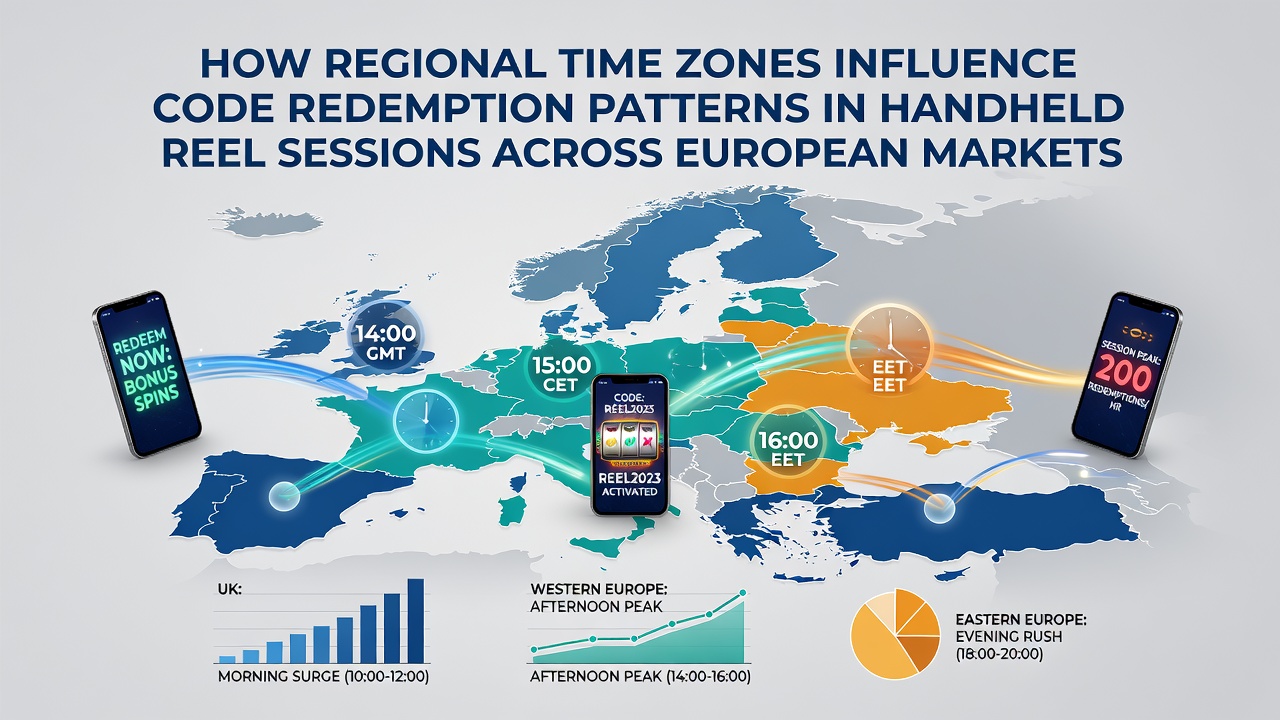
European markets display distinct redemption behaviors for bonus codes in handheld reel sessions because multiple time zones divide player activity across the continent. Western European Time, Central European Time, and Eastern European Time create staggered windows that operators monitor when releasing limited-time offers. Data from industry reports show redemption spikes align closely with evening hours in each zone rather than a single unified peak.
Mapping Time Zone Divisions in European Gaming
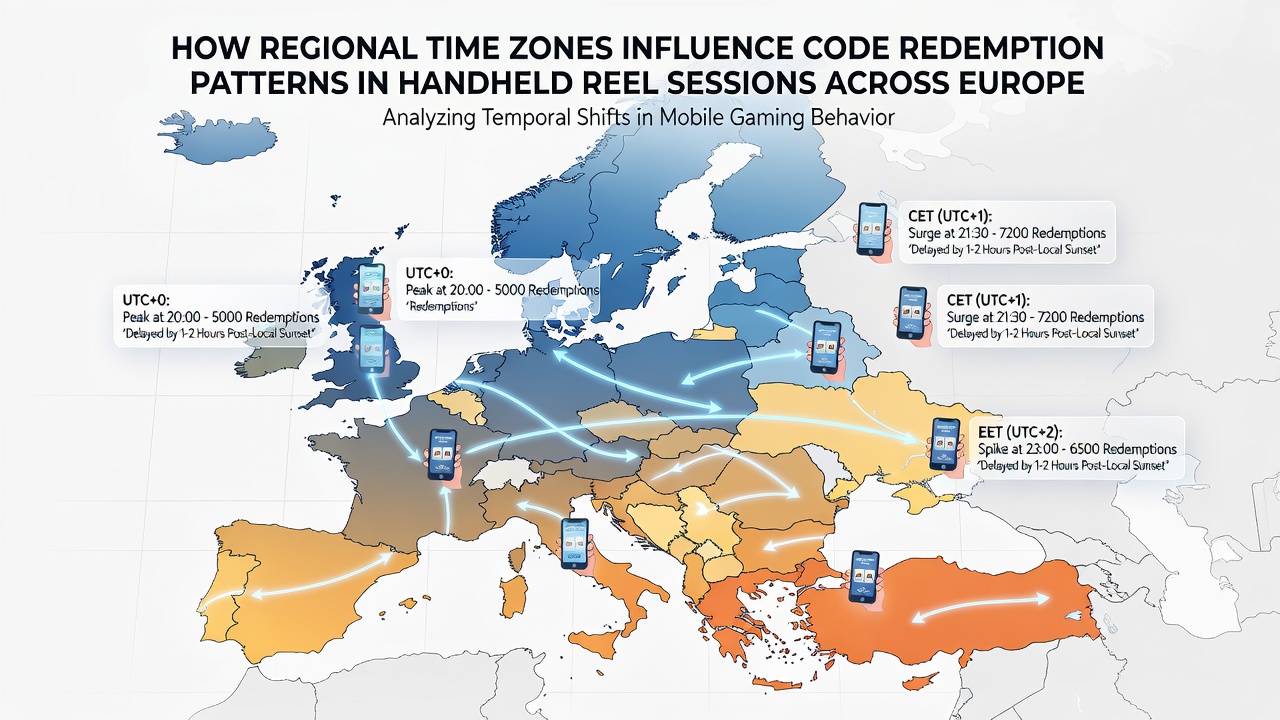
Countries operating under Western European Time such as Portugal and the Republic of Ireland record earlier activation clusters compared with Central European nations. Operators adjust code validity periods to start at 18:00 local time in each region because that window captures the largest share of active handheld users. Eastern European Time markets including Romania and Bulgaria show delayed surges that begin roughly two hours later yet maintain similar overall volumes once the codes become available.
Redemption Patterns by Region During August 2026
Figures released in August 2026 indicated that code redemptions in handheld reel sessions rose 14 percent in Central European Time zones between 19:00 and 22:00 local time. The same period produced a 9 percent increase in Western European Time markets and an 11 percent lift in Eastern European Time zones. Researchers at several gaming analytics firms tracked these differences through anonymized session logs that captured exact redemption timestamps across operator platforms.
Players in Spain and France frequently complete redemptions during post-dinner hours while users in Poland and Greece show stronger activity closer to midnight local time. These offsets force operators to stagger bonus code releases rather than launch them simultaneously across all markets. One study published by an academic research group found that synchronized releases led to lower overall uptake because many players missed the window in their specific time zone.
Operator Strategies for Zone-Specific Code Delivery
Platform teams now segment code distribution lists according to registered player locations and corresponding time zones. This approach allows separate start times for the same promotional code so that users in different regions receive equivalent opportunities. According to data compiled by the European Gaming and Betting Association, segmented releases improved average redemption rates by 18 percent compared with uniform launches during the first half of 2026.
Some operators extend code validity windows to 48 hours to bridge multiple time zones while others shorten them to 12 hours and rotate fresh codes throughout the day. Both methods appear in current market practice because each suits different game portfolios and player demographics. Handheld reel sessions benefit particularly from these adjustments since mobile users often check offers during short breaks that coincide with local evening routines.
Influence of Daylight Saving Adjustments
Daylight saving transitions create additional complexity for code scheduling across Europe. When clocks move forward or back, previously stable redemption patterns shift by one hour and operators must recalibrate their systems. Records from 2026 show that the March transition produced a temporary 7 percent drop in redemptions until platforms updated their timing parameters within 48 hours. The October change generated a smaller 4 percent fluctuation because many operators had already implemented automated adjustments based on prior experience.
Those who studied these seasonal effects observed that players in countries that do not observe daylight saving, such as certain Eastern European markets, maintain steadier patterns year-round. This consistency allows operators to maintain fixed schedules for those regions while applying dynamic timing elsewhere.
Data Sources and Industry Tracking Methods
Analytics platforms collect redemption timestamps through server logs that record both the code entered and the device time zone. Cross-referencing these logs with player registration data produces maps of activity that operators use for future campaign planning. A report from the University of Malta's gaming research unit examined similar datasets and confirmed that time zone alignment correlates strongly with higher conversion rates for limited-time offers.
Additional information comes from regulatory bodies in multiple jurisdictions that require operators to publish aggregated session statistics. These reports supply the raw numbers that researchers use to identify broader trends across European markets without accessing individual player details.
Conclusion
Time zone differences across Europe continue to influence how players redeem bonus codes during handheld reel sessions. Operators respond by refining delivery schedules and validity periods to match local activity peaks. Data collected through 2026 demonstrates that these adjustments produce measurable improvements in redemption volumes across Western, Central, and Eastern European Time zones. Ongoing monitoring of session logs and seasonal clock changes supports further refinements in code distribution strategies.