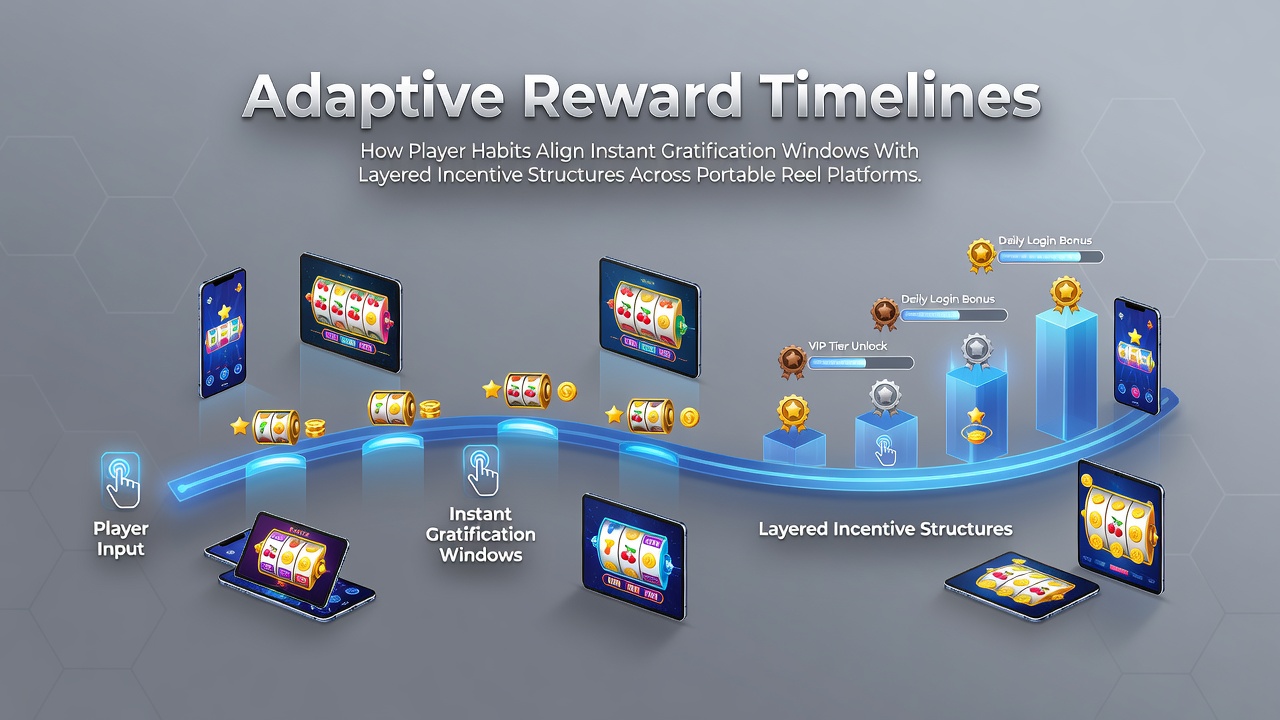
How Portable Reel Platforms Time Rewards to Player Gratification Patterns
Portable reel platforms have developed systems that match reward delivery to observed player activity cycles, creating timelines where instant gratification windows intersect with structured incentive layers; these mechanisms rely on data from session durations, spin frequencies, and return patterns to adjust bonus activation points across mobile devices.
Operators track user engagement metrics to identify peak moments when players expect immediate feedback, then align short-term rewards such as free spins or small multipliers with longer-term structures including loyalty tiers and progressive accumulations; this coordination occurs through algorithms that process real-time inputs from device usage and historical play records.
Player Habit Data and Reward Synchronization
Research from the Australian Gambling Research Centre indicates that mobile slot sessions average between 12 and 25 minutes when players receive rewards within the first three minutes of activity, while extended sessions beyond 40 minutes often incorporate secondary incentive layers that activate after specific spin thresholds; these patterns emerge consistently across Android and iOS platforms in markets outside the United Kingdom.
Analysts note that gratification windows narrow during evening hours between 7 pm and 11 pm local time, prompting platforms to deploy adaptive triggers that release instant credits or feature unlocks precisely when engagement metrics show signs of plateau; layered structures then sustain participation by escalating from basic spin bonuses to cumulative jackpot contributions.
Layered Incentive Structures Across Devices
Portable platforms organize incentives into sequential tiers that activate based on cumulative play volume, with the first layer delivering immediate small-value rewards and subsequent layers unlocking after set intervals such as 50 or 100 spins; this progression integrates with device notifications that prompt users at optimal intervals derived from aggregated session analytics.
Canadian provincial data compiled by the Ontario Lottery and Gaming Corporation shows that players who receive tiered rewards spaced at 8-minute intervals maintain session lengths 18 percent longer than those offered single-layer incentives, while the integration of portable-specific features like touch-optimized reel animations further aligns user expectations with reward timing.

July 2026 Platform Adjustments
In July 2026 several portable reel operators introduced refined timeline models that incorporate location-based adjustments for travelers, shortening initial gratification windows by two minutes when devices detect movement across time zones; these updates build on earlier frameworks by adding cross-device continuity that carries reward progress from phone to tablet sessions without resetting incentive layers.
Industry reports from the International Gaming Institute at the University of Nevada, Las Vegas document that such adaptive changes correlate with a 14 percent rise in repeat logins within 48 hours, as players encounter consistent reward pacing regardless of hardware switches; the models continue to rely on anonymized behavioral datasets rather than individual identifiers.
Regional Variations in Implementation
European operators outside UK jurisdictions apply similar structures with emphasis on afternoon activation peaks between 2 pm and 5 pm, using layered systems that combine instant spin credits with weekly accumulation bonuses; Australian platforms, by contrast, extend evening windows to accommodate longer commute-based sessions recorded in metropolitan data sets.
These regional differences stem from aggregated usage statistics rather than regulatory mandates, allowing platforms to calibrate timelines according to observed habit clusters while maintaining separation between instant and sustained incentive components.
Conclusion
Portable reel platforms continue refining reward timelines through ongoing analysis of player activity data, ensuring that instant gratification windows integrate smoothly with layered incentive structures across mobile environments; the approach relies on empirical session metrics collected from diverse geographic markets and device types to maintain alignment between user patterns and system outputs.