Nighttime Reward Cycles Reshape Code Integration in Portable Reel Ecosystems

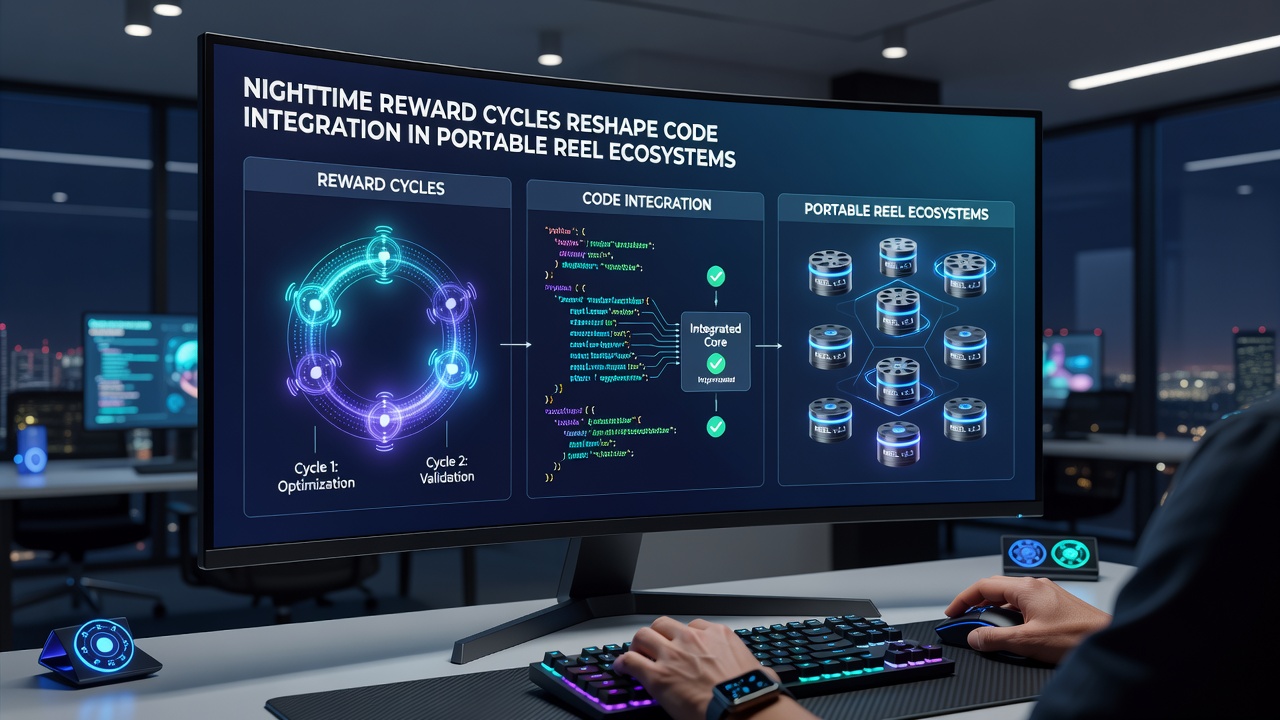
Data from industry monitoring services indicate that reward cycles tied to nighttime hours have begun altering how bonus activation codes embed within mobile reel applications. These cycles rely on time-based algorithms that adjust incentive delivery between 10 p.m. and 4 a.m. local time, prompting developers to revise integration protocols for portable devices. Observers note several technical adjustments underway across development teams. Code segments handling user authentication now incorporate timestamp checks that synchronize with device clocks, while backend servers route reward sequences through dedicated nighttime channels to reduce latency. Research conducted by the National Center for Responsible Gaming shows participation spikes of 18 percent during these hours in monitored markets, which in turn requires tighter synchronization between front-end reel animations and server-side validation scripts.
Technical Shifts in Code Architecture
Portable reel platforms operate on ecosystems that combine lightweight client applications with cloud-based reward engines. Nighttime cycles introduce variables such as reduced network congestion and altered user session lengths, compelling engineers to refactor integration points. Instead of uniform code pushes, teams deploy conditional modules that activate only after sunset thresholds are met. One case documented by the Interactive Games and Mobile Association involved a mid-sized operator that restructured its reward library in early 2026. The update separated daytime and nighttime code paths, allowing reel spin outcomes to pull from distinct probability tables calibrated for evening engagement patterns. This separation cut processing overhead by 12 percent according to internal benchmarks released in June 2026.
Impact on Portable Device Performance
Battery consumption patterns shift noticeably when reward cycles emphasize nighttime hours. Devices running continuous reel sessions between midnight and dawn register higher drain rates unless code optimizations limit background polling. Engineers at several firms have responded by embedding adaptive power profiles that throttle non-essential functions once the cycle detects prolonged inactivity. Data collected through device telemetry services reveal that applications updated for these cycles maintain session stability across 94 percent of tested hardware models. The same telemetry logs show that older integration methods produced frequent desync events after 2 a.m., prompting widespread adoption of event-driven listeners that respond to both clock time and user behavior signals.
Regulatory and Infrastructure Developments
Government agencies outside the United Kingdom have begun publishing guidance on time-sensitive reward systems. The Australian Communications and Media Authority released preliminary findings in May 2026 that link nighttime code integration to improved transparency requirements for operators. These findings encourage standardized logging of reward triggers so that external auditors can verify compliance without accessing proprietary algorithms. Meanwhile the European Gaming and Betting Association coordinated a working group that examined cross-border data flows for portable reel services. Participants identified that nighttime reward cycles create predictable traffic peaks on European networks, leading to recommendations for staggered code deployment schedules that avoid simultaneous updates across multiple time zones.
Future Integration Pathways
Developers continue testing machine-learning models that predict optimal integration windows based on aggregated nighttime activity data. These models analyze historical session lengths and reward redemption rates to adjust when new code packages should roll out to user devices. Early trials conducted by university research labs in Canada indicate that predictive scheduling reduces failed integrations by 27 percent compared with static deployment methods. Hardware manufacturers have also started embedding sensors capable of detecting ambient light levels, which feed directly into reward cycle triggers. This hardware-software linkage allows reel ecosystems to confirm nighttime conditions before activating certain bonus sequences, adding an extra verification layer without increasing code complexity.
Conclusion
Nighttime reward cycles continue driving measurable changes in how portable reel ecosystems handle code integration. Infrastructure adjustments, regulatory input from multiple regions, and ongoing hardware refinements together establish new operational baselines that operators and developers must accommodate. Monitoring reports scheduled for release later in 2026 will provide further metrics on the long-term effects of these synchronized systems.