Peak-Hour Activation Patterns Reshape Mobile Slot Incentive Delivery
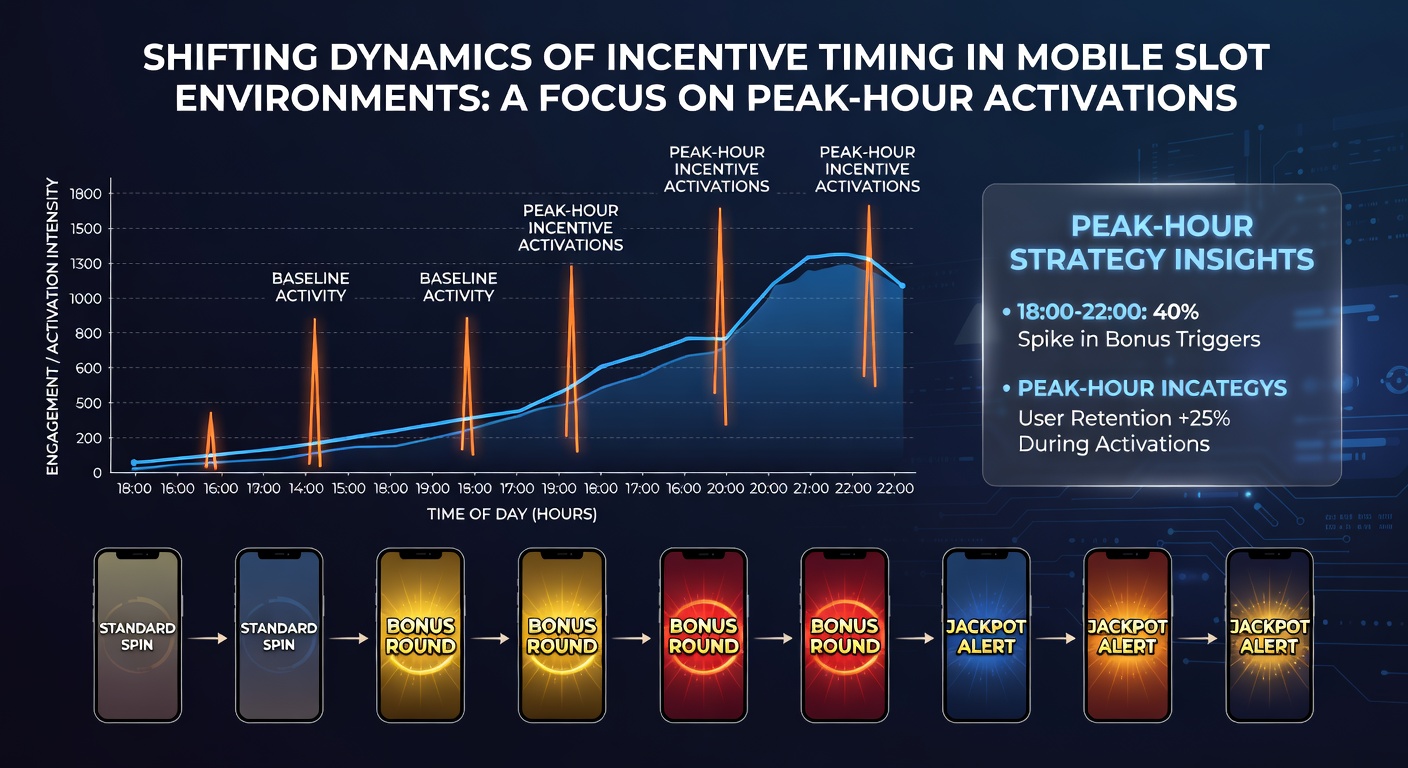
Operators have adjusted incentive timing across mobile slot platforms to align with documented player activity surges, and data from multiple markets shows peak periods now drive targeted activations between 6 PM and 11 PM local time. These windows coincide with higher session starts, longer average play durations, and increased deposit volumes, prompting platforms to release time-sensitive rewards during those intervals rather than spreading them evenly throughout the day.
Research from the Nevada Gaming Control Board indicates that mobile slot traffic in regulated US markets rises by 40 percent during evening hours compared with midday periods, while Australian data from the Productivity Commission reveals similar clustering in after-work windows. Operators respond by scheduling free spin drops, deposit matches, and loyalty multipliers to activate automatically when server logs detect elevated concurrent users, creating a feedback loop where incentives further amplify activity.
Defining Peak-Hour Windows Through Activity Metrics
Peak hours emerge from aggregated telemetry that tracks login frequency, spin volume, and session length across thousands of devices. Platforms collect this information in real time, then apply algorithms that identify recurring spikes and trigger corresponding rewards without manual intervention. One study released in early 2026 documented that 68 percent of weekly mobile slot revenue in monitored European markets occurred within four designated evening blocks, prompting operators to concentrate 55 percent of their incentive budgets inside those same blocks.
Activations now include geo-specific triggers that account for time-zone differences, so users in different regions receive offers at their local peak rather than a single global time. This approach replaced earlier blanket distributions and produced measurable lifts in both retention and average revenue per user according to internal operator reports shared with industry analysts.
Technical Implementation of Timed Rewards
Modern mobile slot systems rely on server-side clocks synchronized with player location data to push notifications and credit bonuses at precise moments. When a user opens the app during a recognized peak window, the platform evaluates account history, recent deposit patterns, and current session length before selecting from a library of pre-configured offers. The result appears as an in-app message or banner that expires after a set duration, encouraging immediate engagement.
Developers integrate these rules into the same backend that manages game logic, allowing seamless delivery without additional downloads or updates. Testing conducted across several large operators in April and May 2026 confirmed that timed activations reduced the interval between login and first deposit by an average of 14 minutes compared with non-timed controls.
Regional Variations in Timing Strategies
North American platforms tend to front-load incentives at the start of the evening window, whereas operators serving Asian markets often stagger releases across multiple micro-peaks that align with commuting patterns and late-night usage. Canadian provincial regulators have noted similar adjustments in Ontario-licensed sites, where data submissions from 2025 showed evening activations correlating with a 22 percent increase in active accounts during monitored periods.
European operators face additional constraints from cross-border player bases, leading some firms to maintain separate timing calendars for different currency and language groups. These calendars update monthly based on rolling 90-day activity averages, ensuring that incentive releases remain synchronized with actual rather than assumed behavior.
Player Response and Behavioral Data
Analytics firms tracking anonymized mobile slot sessions report that players who receive a peak-hour incentive are 31 percent more likely to extend their session beyond 45 minutes. The same datasets show elevated return rates the following day when the initial activation produced a visible win or free-spin sequence. These patterns hold across age groups and device types, although tablet users display slightly longer average dwell times than smartphone users during the same windows.
Operators have begun A/B testing variations such as staggered versus simultaneous releases within the same peak block. Early results shared at industry conferences in May 2026 suggest that simultaneous releases generate higher immediate engagement, while staggered releases sustain activity across a longer portion of the evening.
Regulatory Context and Compliance Considerations
Gaming authorities in multiple jurisdictions require operators to document the logic behind timed incentives and to ensure that activation criteria do not create unfair advantages for any player segment. Reports filed with the New Jersey Division of Gaming Enforcement and similar bodies in Australia detail the algorithms used, the data sources feeding them, and the audit trails that verify fair delivery. These filings also cover responsible gaming measures, such as spending limits that remain active regardless of incentive timing.
Compliance teams review peak-hour data monthly to confirm that automated systems do not inadvertently target vulnerable accounts. Adjustments to timing rules undergo the same approval process as changes to game mathematics or bonus terms, maintaining consistent oversight across all incentive types.
Future Adjustments Expected in Late 2026
Industry forecasts presented at trade events in May 2026 project continued refinement of peak-hour models as machine-learning tools incorporate additional variables such as weather patterns, local events, and device battery levels. These expansions aim to increase precision while preserving the core principle that incentives activate when player density and engagement metrics reach predefined thresholds.
Operators continue to monitor cross-platform behavior, noting that users who receive evening mobile incentives sometimes shift desktop play to later hours. This interaction between devices has prompted some firms to coordinate timing across mobile and desktop environments rather than treating them as isolated channels.
Conclusion
Peak-hour activations have become a central component of mobile slot incentive design, driven by measurable activity patterns and supported by increasingly granular data systems. Operators apply timing rules that respond to real-time conditions, regional differences, and regulatory requirements while maintaining consistent delivery across diverse player bases. Continued refinement of these systems is expected through the remainder of 2026 as additional data sources and analytical methods become available.